When I found out I was pregnant with my son, I felt all the emotions you’d expect: joy, anticipation, fear. But never, in all those months of planning and dreaming, did I imagine what I’d feel after we brought him home.
Nothing.
I looked down at his tiny face, his perfect little hands, and I felt empty. Where was the flood of love I was supposed to feel? The euphoria? The connection? I tried to fake it, even to myself, but deep down, I was terrified. How could I not love my own baby? What kind of mother was I?
That emptiness grew into something darker. Days turned into nights that I could hardly differentiate, and the smallest things set me off. My daughter spilled juice on the floor, something so minor, so ordinary, and I screamed at her like she’d committed an unforgivable sin. Her little face crumpled in fear, and I hated myself for it. But I couldn’t stop. It was like an uncontrollable fire burning inside me, ignited by everything and nothing at all.
There were moments I thought about disappearing – not dying, I never got to a point that I wanted to hurt myself or my kids – but just walking out the door and never coming back. I wanted to escape my kids, my husband, my life. It wasn’t that I didn’t love them. It’s that I couldn’t feel anything anymore except anger, exhaustion, and a crushing sense of failure.
Looking back, I realize how much of my struggle likely stemmed from Connor being such a difficult baby. He had colic and reflux, and those early weeks were brutal. We barely got any sleep, and the house was constantly filled with screaming – his, mine, or both. It was a stark contrast to our experience with Anna, who had been an easy baby by comparison. With Connor, the endless crying and sleepless nights wore me down in ways I wasn’t prepared for. I felt like I was failing him every time I couldn’t soothe him, and the noise and exhaustion created a pressure cooker I didn’t know how to escape. It wasn’t just postpartum depression – it was the perfect storm.

I didn’t suffer from postpartum depression with my daughter, and I was so grateful for that. But now, looking back, I know that difference is part of what saved me. Because the contrast between my experiences with her and with my son made it clear that something was drastically wrong. That doesn’t mean I didn’t struggle the first time; I battled postpartum anxiety with Anna. I worried constantly about carrying her up and down the stairs in our house, convinced I might fall and drop her. Every time I drove over the bridge by our home – a bridge we crossed twice a day – I ran through imaginary escape plans in case something went wrong. Still, it wasn’t as suffocating as what I faced after Connor. In hindsight, I should have known I might struggle more this time; while I was pregnant, I nearly had a nervous breakdown in Walmart just because I couldn’t find my husband. I recognized that I felt similarly to that anxiety I had felt when Anna was a baby. That moment foreshadowed a storm I wasn’t ready for.
I knew something was wrong, but I couldn’t bring myself to say it out loud. What kind of mother admits she feels like this? What if they thought I was unfit? What if they took my kids away? So I kept it in, pretending I was fine, until I was preparing my six-week postpartum check-up.
The doctor handed me a piece of paper: the postpartum depression evaluation. I sat in the sterile office, staring at the questions, and for the first time, I told the truth.
Yes, I felt hopeless.
Yes, I was overwhelmed.
Yes, I was struggling to bond with my baby.
When my OBGYN came into the room, he didn’t ask me why I lied or why I hadn’t said anything sooner. Instead, he gently told me we had a plan. He offered me medication and therapy. I sobbed uncontrollably through that entire appointment, not because I was ashamed of needing help, but because I was relieved that someone else had noticed. Someone cared enough to pull me out of the hole I’d been silently sinking into. Not that I didn’t have that care at home. But sometimes, while our husbands see us and love us, they feel dramatically unequipped to help us in these moments. And sometimes, they’re struggling themselves.
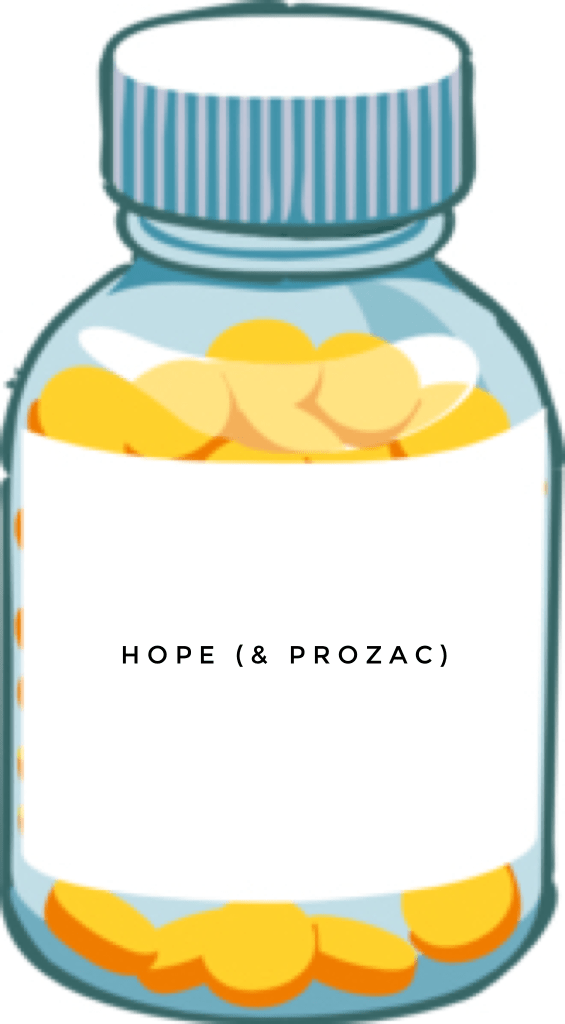
But accepting help wasn’t easy. Picking up my prescription from the pharmacy felt like announcing to the world that I was a failure as a mother. It took me days to open the bottle and even longer to take that first pill. But when I finally did, it was like a light turned on in a room I didn’t even know I was standing in.
The fog started to lift, little by little. I could smile at my son without forcing it. I could apologize to my daughter and mean it. I could breathe again.
Still, the fear lingers. What if I can never stop taking this medication? What if this becomes part of my identity forever? And as someone tied to the military, I worry even more. Will I be allowed to keep moving forward in my career? Will I still be considered fit for service, or will they decide I’m too broken to stay? Am I destined to be sent packing because I needed (and may continue to need) help?
I’m still fighting this battle every single day. The medication isn’t a magic cure. Some days, I feel like it doesn’t work at all, and I’m right back in that dark place. But most days, I feel like myself again. And when I look at my son now, I’m overwhelmed by how much I love him. I feel like I could smush him in a hug and never let him go.
The one thing I’ve learned in this battle is that silence is the enemy. I’ve talked with friends who suffered through postpartum depression and anxiety years ago, before tools like the evaluation existed. They told me they felt just as trapped, just as scared, and just as alone. No one should have to fight this war without support, without resources, without a lifeline.
To the mothers out there who feel like they’re drowning: You’re not weak. You’re not alone. And there is a way through this.
Because I see you. I was you. Hell, I still am you. And together, we can fight our way back to the light.
 Pumps & Panic