Breaking Up with HelloFresh (Kindof)

Okay, so it’s time we had “the talk.”

After a lot of back and forth, some side-eyes at my grocery budget, and a few too many moldy tomatoes—I’ve officially decided to break up with HelloFresh. Kind of.

For the past three years, HelloFresh has been a staple in my kitchen. The allure of having pre-portioned ingredients and diverse recipes delivered to my doorstep was undeniable. It transformed my cooking routine, introducing me to new dishes and simplifying meal prep. However, as time passed, certain challenges began to surface, prompting me to reevaluate this relationship.

The Honeymoon Phase

When I first subscribed to HelloFresh, it felt like a culinary adventure. Each week brought new recipes, expanding my cooking repertoire and adding excitement to our meals. The convenience of having everything measured and ready to cook was a significant time-saver, especially on busy weekdays. It seemed like the perfect solution for a hassle-free dining experience at home. These were some of the things I absolutely LOVED about HelloFresh (and still do, honestly.)

But here’s where things went south:

The price.

The inconsistency.

The busted meat packaging.

The missing ingredients.

And the cherry on top? Their customer service is… not it.

When you’re paying nearly $12 per serving, you kind of expect everything to show up fresh, complete, and intact. Especially when we’re talking about feeding a family. I started realizing that for the same amount of money, I could probably feed twice as many people—and have snacks left over.

So I did what any logical, slightly exhausted, and very budget-conscious mom would do: I got scrappy.

Enter: Walmart Recipes Tool.

Y’all, this thing is a GAME. CHANGER.

You can search recipes based on categories that actually fit your life—like meals under $5 per serving or ready in 30 minutes or less (which, let’s be honest, are my go-to filters because times are hard and I’ve got things to do). Once you find a recipe, you just click a button and boom—all the ingredients are added to your Walmart cart, ready for grocery pickup. No wandering aisles. No math. No drama.

Wanna Try It Out? Here’s How I Use the Walmart Recipe Tool:

• Open up the Walmart app (you probably already have it, let’s be real).

• Hit the search icon on the bottom of the app and scroll down to the “Grocery” section.

• Tap on “Recipes” — that’s where the magic happens.

• From there, you can filter by whatever you want: budget, cook time, vibes — go wild.

• Find a recipe you like? Just click “Add ingredients to cart” and boom, your grocery list is done.

That’s literally it, y’all. It could not be easier.

That may be a breeze, but sometimes I like to make life harder for myself. Of I really want to flex my savings muscles, I’ll price check a few things on the Aldi app, swap out a couple of ingredients, and do a second pickup there. I know, I know—I sound like I have my life together. I don’t. But when I do this? It feels like I do.

Here’s the deal:

HelloFresh taught me a lot.

It got me out of my cooking rut.

It reminded me that I can make bomb meals at home, without spending an hour doing it.

But now that I know I can get the same recipes (or close enough) and feed my family for half the cost, I just can’t justify the subscription anymore. Not when we’ve had so many issues with the boxes themselves and basically no help when things go wrong.

So no, I’m not totally cutting ties. I’ll still be “seeing” HelloFresh—for the recipes. But I’ve officially moved on when it comes to the groceries.

Here’s to cheaper meals, faster dinners, and way fewer soggy produce surprises.

I’d like to end this by saying Walmart has no clue who I am, and they’re not paying me for this in any way.. but it would sure be cool if they did.

If You Think Parenting Is Easy, You’re a Bad Parent

Yeah, I said it. And I know I’m going to catch heat for it—bring it on.

I already know people are going to read that headline and clutch their pearls, but let’s be real for a second. If you think parenting is easy, you’re either lying to yourself, ignoring your responsibilities, or you’ve outsourced your parenting to a screen. I don’t say this to be mean—I say it because I care deeply about what our kids are being raised to believe is “normal,” and I’m not here to sugarcoat anything. I care about our kids’ future, and I care about how it’s going to affect ours.

I’m a full-time working mom. Oh, and that “full-time” is spent in the military. I’m also working my own small business. I wake up before the sun, run on fumes and caffeine, and somehow still manage to raise a toddler and care for a newborn (okay he’s seven months old now but he still FEELS like a newborn.)

When we brought our second baby home, I didn’t suddenly shove a tablet in my daughter’s face to make life easier. Her screen time didn’t increase. In fact, it stayed incredibly limited—because that’s how we’ve chosen to parent, even when it’s hard. Especially when it’s hard.

And I get it. It is hard. Parenting today is exhausting and overwhelming. But doable is not the same as easy. Just because something’s hard doesn’t mean we get to give up or opt out with shortcuts that will have long-term effects on our kids. Screens are the easy way out—and we’re paying the price for that “ease.”

Let’s Talk About the Phones

If your 2-year-old and 4-year-old are fighting over your cell phone in the grocery store line, I’ll say it again: you’re a bad parent. Let that sting if it needs to. Kids aren’t born addicted to screens—we hand them electronics and form the addiction for them, and then act surprised when they crave it. We’re teaching them that attention and stimulation need to come from a device, not from people, not from imagination, not from the real world.

And yes, I know all the “but you don’t understand” arguments. Trust me—I do. I have diaper blowouts and toddler tantrums happening while I’m trying to get dinner on the table too. I’ve survived sleepless nights and 4 a.m. wake-up’s to get to work. I’ve spent countless 8+ hour roadtrips with my kids (hello Norfolk to Kansas City,) but I made the decision that my hard will not be my child’s burden. Screens aren’t babysitters—they’re developing brains being shaped by flashing lights and mindless content.

Get Off Your Own Phone

Let’s have a real moment: we have to get off our own damn phones. I know—you’re reading this on your phone. So am I while writing it. I’m just as guilty as the next parent. But I recognize it. And I’m trying. Because if I’m glued to a screen all day, what do I expect my toddler to want to do?

They’re watching us. They learn by copying us. If our faces are always lit up by a glowing screen, they’ll think that’s where life happens. And y’all—it’s not. Life is happening right in front of us. Let’s not miss it.

What the Research Says (And Yes, I’ve Actually Done the Research)

Look, I’m not a doctor. I’m not a child psychologist. I’m not even close. But I’m also not just shouting into the void without doing my homework. I’ve spent time reading actual studies and doing research projects on this topic—not influencer blog posts, not mommy Facebook groups—real research, and it’s horrifying how bad screen time can be for our kids…and for us.

• A study published in JAMA Pediatrics followed over 7,000 kids and found that toddlers who had more than 4 hours of screen time daily at just 1 year old were already showing communication and problem-solving delays by ages 2 and 4.

Read it here

• A 2019 study literally scanned kids’ brains and found that excessive screen time shrinks white matter in parts of the brain that are responsible for language and literacy development. Like, it’s changing their brain structure.

Read it here

• Another JAMA study followed teens and found that the more screen time they had, the more likely they were to show depressive symptoms, especially when it came to social media and TV time.

Here’s the study

• Oh, and it messes with sleep too. Like, a lot. One study found that even one hour of screen use before bed can increase your risk of insomnia by 59% and mess with REM cycles.

Proof is here

• Possibly the scariest one? A U.S. study on kids ages 9–11 found that each additional hour of daily screen time was associated with a 9% higher risk of suicidal thoughts or behaviors two years later. Let that sink in.

Link to the study

This isn’t just “screens are kinda bad.” This is real damage—developmentally, mentally, emotionally. It’s not just bad for kids. It’s bad for us. Adults who constantly scroll are more likely to experience anxiety, depression, poor sleep, and relationship issues. We’re lonelier than ever, overstimulated, and overwhelmed—and we keep wondering why.

There Are Better Options

Now, let me be clear: if you do use screen time, I’m not saying you’re a lost cause. I’m saying it’s never too late to course-correct.

There are high-quality, educational, and interactive options out there if you feel like you need to use a screen as a break. I know, because I do it. I’m not saying ZERO screen time is the answer. But time limits are imperative and you MUST commit yourself to only providing your kids with something beneficial for them.

Ms. Rachel is great. Go Danny Go! is fun and gets kids moving. There are even toddler “workouts” you can do with your little one that make screen time active instead of passive. Just don’t confuse 4 straight hours of Cocomelon with positive stimulation. (p.s. I’ve read that it’s like cocaine for kids.)

And let’s not forget the most underrated option of all: outside. Dirt doesn’t require a Wi-Fi signal.

Parenting Is Supposed to Be Hard

We weren’t meant to parent perfectly. But we were meant to be present. And do our best. That’s what our kids need most. Not another app. Not a new subscription. Us.

So yeah, if parenting feels “easy,” maybe it’s time to take a good hard look at what’s making it feel that way. Is it convenience? Is it distraction? Or is it true connection?

I know this post might piss some people off. That’s okay. I’m not here for popularity—I’m here for accountability. For myself and for every parent trying to raise strong, emotionally healthy kids in a world that makes it really easy not to.

So if you’ve handed your kid the phone a few too many times lately, take a breath. Don’t spiral. Just do better next time. Because you can.

It’s Not Just the Screens—Parenting Is Hard Because Kids Are Hard

Let’s be honest: parenting isn’t hard just because of screen time. It’s hard because kids aren’t easy. Even the most well-behaved, gentle, emotionally-regulated child will still push every single one of your buttons at some point. Because that’s what they’re wired to do—they’re learning, they’re testing limits, they’re expressing emotions they don’t even have the words for yet. And sometimes that looks like throwing themselves on the floor in Target because the wrong song came on. Or screaming like they’ve been stabbed because you cut their toast the wrong way.

Tantrums aren’t easy. The constant why? why? why? isn’t easy. The tears that come out of nowhere, the emotional rollercoaster of a child who wants independence but still needs to be carried through the parking lot—it’s all hard. And then there’s bedtime. The 47 requests for water, the stuffed animal you forgot to grab, the “I need to tell you something” that magically appears five seconds after you finally sit down. There’s nothing that tests your patience quite like your kid getting out of bed for the 1000th time at 10 p.m. when you’re already running on fumes.

And don’t even get me started on how hard it is to maintain a marriage through all of this. Parenting doesn’t just stretch you as a mom—it stretches your partnership, too. Communication becomes more complex. Intimacy gets put on the back burner. You’re both tired, both stressed, both trying to navigate this chaos in your own ways—and sometimes that means you’re not even on the same page. Balancing the emotional needs of your kids and your spouse while trying to keep the household running is like juggling knives on a tightrope with your eyes closed. It’s a full-time job… on top of the actual full-time job.

So when I say parenting isn’t easy, I’m not just talking about screen time. I’m talking about the daily grind. The mental load. The guilt. The sacrifice. The showing up every single day when you feel like you have nothing left to give. Raising decent, kind, emotionally healthy humans takes everything you’ve got—and then some. But you do it anyway. Because that’s what we do. Not because it’s easy, but because it matters.

It won’t be easy—but that’s the point.

Parenting isn’t easy. It’s worth it.

Six Months Gone in a Blur: Motherhood, Grief, and the Weight of Remembering

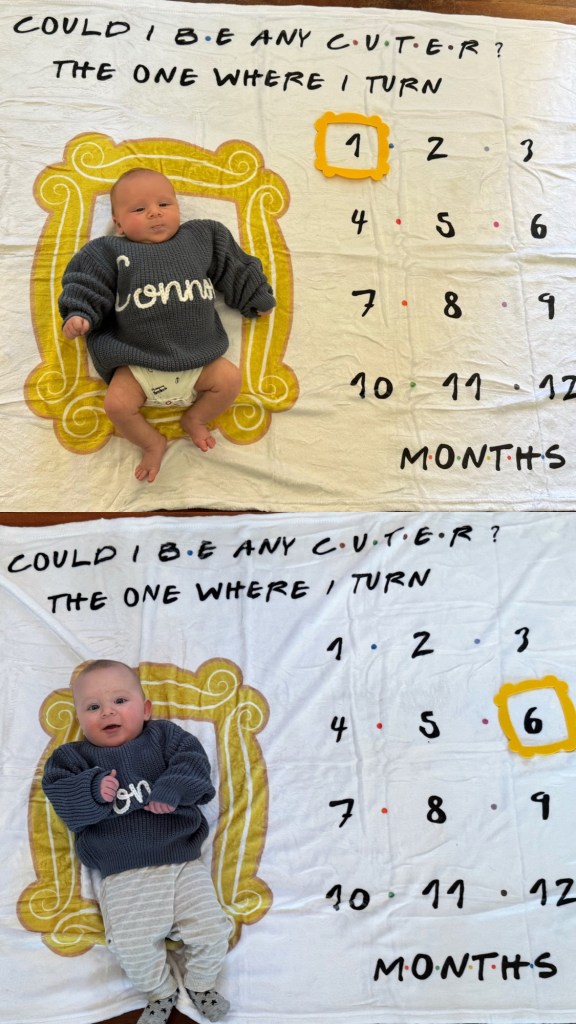
Six months. Somehow, my baby—my second, and last, baby—is already half a year old. I knew it would go fast. I knew it.

From the moment they told me I had to go in for an unplanned c-section, I knew. When I made the split-second decision to have my tubes tied while they were already in there—knowing we had planned for my husband to take on that responsibility but deciding this was just… easier—I knew. This was it. My last firsts.

I told myself I would savor every second. I’d soak in every tiny cry, every sleepy stretch, every impossible little detail. But life had other plans.

Because the truth is, I don’t really remember the newborn days. Not the way I thought I would. Not the way I wanted to.

I remember the screaming, though. Oh, do I remember the screaming. This baby was miserable. He was angry at the world, and his only way to process that was to let us all know about it. And with a full-grown toddler already demanding attention, there wasn’t time to sit and stare in awe the way I did the first time around.

I remember the exhaustion. The brutal, relentless exhaustion. The kind that makes your bones ache and your brain stop working. The kind that turns weeks into one long, never-ending night. Mastitis, clogged ducts, postpartum depression—it all piled up, making everything hazy. I was so busy surviving that I forgot to see.

And now? He’s six months old. He’s squishy and giggly and sitting up and starting to show us who he really is. And I feel like I missed it. Like I blinked, and his newborn days were gone before I even had the chance to hold onto them.

And now I’m at another crossroads—breastfeeding.

I always told myself I’d make it to six months and then see how I felt. And here I am, at six months, and I don’t know what I want. I miss cheese. I miss eating without checking labels. I miss the freedom of not having my body so completely tied to someone else’s needs. But I also know how good this is for him—his immune system, his nutrition, the way I can just pop him on the boob and not worry about bottles or warm water or packing extra supplies when we go somewhere. It’s all right there, ready to go.

But I’m tired. And I don’t know if I can keep going. But I also don’t know if I can let go.

And through all of this—the sleepless nights, the screaming, the feeding struggles, the crushing weight of trying to be a good mom—I keep circling back to one thing.

I miss my mom.

She died when I was 12. A sudden heart attack at 44. No warning, no time to prepare—just gone. And now, every big moment of my life feels like it has this gaping hole in it where she’s supposed to be.

But the hardest part? The part that makes this all so complicated? She wasn’t a great mom.

And that makes me so mad.

She was funny and kind. She was brilliant. She was strong. And she was so, so loved, and loved us, and made sure we knew it. But she wasn’t patient. She wasn’t soft. She wasn’t someone I could go to for comfort. She was angry. And jaded. And was the definition of hurt people hurt people. And now that I have my own kids, I see how easy it is to just be decent. To just be kind. To just show up. And she didn’t.

I don’t have her here to tell me I’m doing okay. I don’t have her to help when I’m drowning in the hard parts of motherhood. And I don’t have the memories of her being a great mom to fall back on when I need reassurance. I only have the loss. And the longing. And the growing anger at someone I can’t even talk to anymore.

So I sit here, holding my six-month-old, watching the days slip by faster than I can hold onto them, wondering if I’m doing enough. Wondering if I’m being enough. Wondering if my kids will look back and feel loved, feel safe, feel seen.

Because if there’s one thing I do know, it’s this: I don’t want them to ever question how much I loved them. Even if I don’t remember every second of their tiny days, even if I don’t always get it right, even if I don’t know what I’m doing half the time—they will know they were loved.

And maybe that’s enough.

The Power of Grace: Speaking to Yourself with Kindness in Front of Your Kids

As parents, we often hear how important it is to speak kindly to our children, to build them up with affirming words and encouragement. But how often do we extend that same grace to ourselves? How often do we pause to consider the words we use when we talk about ourselves—especially in front of our kids?

The truth is, our children are always watching and listening. They’re soaking in the way we speak, not only to them but to ourselves. If we constantly criticize ourselves, put ourselves down, or focus on our perceived failures, they notice. And over time, they learn to model that behavior.

I remember a moment not too long ago when I caught myself muttering, “Ugh, I’m so stupid,” after making a small mistake. My daughter looked up at me with wide eyes and said, “Mommy, you’re not stupid!” Her words were kind, but they made my heart sink. If she heard me speak about myself that way, what would stop her from doing the same when she made a mistake?

For women especially, the way we talk to and about ourselves often begins in front of the mirror. How many times have we stood there, pulling at our skin, analyzing our wrinkles, or picking ourselves apart for not being “enough”? We criticize our bodies, dismiss our beauty, and scrutinize every perceived flaw. And then, standing nearby, is our little girl—watching us, taking it all in. The little girl who looks exactly like us, who admires us more than anyone in the world, begins to wonder if she should pick herself apart too. She starts to see her reflection through the lens of our self-criticism. If we want her to see herself as beautiful and worthy, we have to show her how by treating ourselves with that same love and respect.

That’s when I realized how important it is to talk to ourselves with grace and kindness—not just for our own mental health, but for the example we set for our children.

Why Self-Talk Matters

The way we talk to ourselves shapes our mindset. Negative self-talk feeds insecurity, stress, and a feeling of inadequacy. It creates a cycle that’s hard to break. But when we speak to ourselves with kindness, we cultivate self-compassion and resilience.

Our children deserve to grow up in an environment where they see their parents valuing themselves, even in the face of challenges. When they see us handle mistakes with grace, celebrate small victories, and acknowledge our worth, they learn to do the same.

How to Talk to Yourself with Kindness

Reframe Mistakes: Instead of saying, “I’m such a mess,” try, “I made a mistake, and that’s okay. I’ll do better next time.” This teaches your children that mistakes are part of learning and growth.

Celebrate Progress:Focus on what you’ve accomplished instead of what’s left to do. “I’m proud of how much I got done today,” is a powerful message—for you and for them.

Practice Gratitude:Speak out loud about what you’re thankful for, including gratitude for your own abilities. For example, “I’m so thankful my body is strong enough to carry me through a busy day.”

Talking About Yourself in Front of Your Kids

Our children learn how to view themselves by watching how we view ourselves. If they hear us calling ourselves “fat,” “lazy,” or “a failure,” they may start to internalize those same labels for themselves.

Instead, show them what it means to celebrate who you are. Talk about your strengths openly: “I’m really proud of how creative I was with that project,” or “I worked hard on dinner tonight, and I’m glad it turned out well.” These moments teach your kids that self-pride isn’t arrogance—it’s self-respect.

And when you’re feeling vulnerable, be honest in a way that models resilience. “I had a tough day today, but I’m trying to be patient with myself” shows your children that it’s okay to have hard moments, as long as we treat ourselves with care.

Grace for Yourself, Grace for Them

One of the greatest gifts we can give our children is the understanding that they don’t have to be perfect to be loved or valued. But we can’t teach that if we don’t believe it about ourselves.

When you speak to yourself with grace and kindness, you’re not just changing your own inner dialogue—you’re shaping the way your children will speak to themselves for years to come. You’re showing them what it means to love themselves, flaws and all.

So the next time you catch yourself speaking negatively, pause. Would you say that to your child? If not, don’t say it to yourself. Extend the same kindness to yourself that you so freely give to others.

Because your kids are listening. And one day, when they face their own challenges, they’ll remember how you spoke to yourself—and they’ll know how to find their own voice of grace.

The War Within: My Struggle with Postpartum Depression

When I found out I was pregnant with my son, I felt all the emotions you’d expect: joy, anticipation, fear. But never, in all those months of planning and dreaming, did I imagine what I’d feel after we brought him home.

Nothing.

I looked down at his tiny face, his perfect little hands, and I felt empty. Where was the flood of love I was supposed to feel? The euphoria? The connection? I tried to fake it, even to myself, but deep down, I was terrified. How could I not love my own baby? What kind of mother was I?

That emptiness grew into something darker. Days turned into nights that I could hardly differentiate, and the smallest things set me off. My daughter spilled juice on the floor, something so minor, so ordinary, and I screamed at her like she’d committed an unforgivable sin. Her little face crumpled in fear, and I hated myself for it. But I couldn’t stop. It was like an uncontrollable fire burning inside me, ignited by everything and nothing at all.

There were moments I thought about disappearing – not dying, I never got to a point that I wanted to hurt myself or my kids – but just walking out the door and never coming back. I wanted to escape my kids, my husband, my life. It wasn’t that I didn’t love them. It’s that I couldn’t feel anything anymore except anger, exhaustion, and a crushing sense of failure.

Looking back, I realize how much of my struggle likely stemmed from Connor being such a difficult baby. He had colic and reflux, and those early weeks were brutal. We barely got any sleep, and the house was constantly filled with screaming – his, mine, or both. It was a stark contrast to our experience with Anna, who had been an easy baby by comparison. With Connor, the endless crying and sleepless nights wore me down in ways I wasn’t prepared for. I felt like I was failing him every time I couldn’t soothe him, and the noise and exhaustion created a pressure cooker I didn’t know how to escape. It wasn’t just postpartum depression – it was the perfect storm.

Picture of our Connor at two weeks old

I didn’t suffer from postpartum depression with my daughter, and I was so grateful for that. But now, looking back, I know that difference is part of what saved me. Because the contrast between my experiences with her and with my son made it clear that something was drastically wrong. That doesn’t mean I didn’t struggle the first time; I battled postpartum anxiety with Anna. I worried constantly about carrying her up and down the stairs in our house, convinced I might fall and drop her. Every time I drove over the bridge by our home – a bridge we crossed twice a day – I ran through imaginary escape plans in case something went wrong. Still, it wasn’t as suffocating as what I faced after Connor. In hindsight, I should have known I might struggle more this time; while I was pregnant, I nearly had a nervous breakdown in Walmart just because I couldn’t find my husband. I recognized that I felt similarly to that anxiety I had felt when Anna was a baby. That moment foreshadowed a storm I wasn’t ready for.

I knew something was wrong, but I couldn’t bring myself to say it out loud. What kind of mother admits she feels like this? What if they thought I was unfit? What if they took my kids away? So I kept it in, pretending I was fine, until I was preparing my six-week postpartum check-up.

The doctor handed me a piece of paper: the postpartum depression evaluation. I sat in the sterile office, staring at the questions, and for the first time, I told the truth.

Yes, I felt hopeless.

Yes, I was overwhelmed.

Yes, I was struggling to bond with my baby.

When my OBGYN came into the room, he didn’t ask me why I lied or why I hadn’t said anything sooner. Instead, he gently told me we had a plan. He offered me medication and therapy. I sobbed uncontrollably through that entire appointment, not because I was ashamed of needing help, but because I was relieved that someone else had noticed. Someone cared enough to pull me out of the hole I’d been silently sinking into. Not that I didn’t have that care at home. But sometimes, while our husbands see us and love us, they feel dramatically unequipped to help us in these moments. And sometimes, they’re struggling themselves.

But accepting help wasn’t easy. Picking up my prescription from the pharmacy felt like announcing to the world that I was a failure as a mother. It took me days to open the bottle and even longer to take that first pill. But when I finally did, it was like a light turned on in a room I didn’t even know I was standing in.

The fog started to lift, little by little. I could smile at my son without forcing it. I could apologize to my daughter and mean it. I could breathe again.

Still, the fear lingers. What if I can never stop taking this medication? What if this becomes part of my identity forever? And as someone tied to the military, I worry even more. Will I be allowed to keep moving forward in my career? Will I still be considered fit for service, or will they decide I’m too broken to stay? Am I destined to be sent packing because I needed (and may continue to need) help?

I’m still fighting this battle every single day. The medication isn’t a magic cure. Some days, I feel like it doesn’t work at all, and I’m right back in that dark place. But most days, I feel like myself again. And when I look at my son now, I’m overwhelmed by how much I love him. I feel like I could smush him in a hug and never let him go.

The one thing I’ve learned in this battle is that silence is the enemy. I’ve talked with friends who suffered through postpartum depression and anxiety years ago, before tools like the evaluation existed. They told me they felt just as trapped, just as scared, and just as alone. No one should have to fight this war without support, without resources, without a lifeline.

To the mothers out there who feel like they’re drowning: You’re not weak. You’re not alone. And there is a way through this.

Because I see you. I was you. Hell, I still am you. And together, we can fight our way back to the light.

From Gym Rat to Gym… What’s That

Once upon a time, I was that person. You know, the one who woke up at 5:00 a.m., threw on matching workout gear, and was front and center at 6 a.m. spin class. My water bottle had inspirational quotes. My playlists were carefully curated to get me through two-a-day workouts. I even ran a 10k at seven months pregnant, feeling like some kind of superhero as my belly led the way.

After running the Navy’s 5 NM at 7 months pregnant

But now? Now, I’m the person who considers carrying a toddler on one hip and a car seat in the other my workout. And don’t even get me started on my current cardio—chasing a preschooler who thinks “tag” is a 24/7 sport.

Getting back to the gym after all that feels like a comedy of errors. It’s like my body remembers the glory days but conveniently forgot how much actual effort went into achieving them.

Where It All Went Wrong (Or Right?)

If I had to pinpoint when I fell off the fitness wagon, it was somewhere between sleepless nights with a newborn and convincing myself that a handful of Goldfish crackers counted as lunch. Life happened. Kids happened. And honestly? Sitting on the couch with a pint of dairy-free ice cream felt a lot more appealing than a plank hold.

It wasn’t just laziness, though. It was exhaustion. Being a mom, a wife, full time in the military, and a photographer in the making took every ounce of energy I had. The idea of adding one more thing—even something I used to love—just felt impossible.

The Great Gym Return

But recently, I decided enough was enough. It wasn’t just about fitting into my pre-baby jeans (though, let’s be real, that’s part of it). It was about feeling like myself again—the version of me who could crush a workout and still have energy to tackle the day.

So, I dusted off my sneakers, dug my old gym bag out of the closet, and made a commitment: I was going back.

The first day was… humbling. I walked into the gym like a long-lost tourist. Machines that I used to know inside and out suddenly looked like alien spacecraft. I climbed onto the treadmill, hit “quick start,” and immediately regretted all my life choices as I tried to jog for more than two minutes.

And don’t even get me started on the weights. I used to deadlift more than my body weight. Now? Lifting the barbell without weights felt like an Olympic feat.

The Emotional Struggle

The hardest part of getting back into the gym wasn’t the physical pain (though, yes, my legs did feel like Jell-O for a solid three days after). It was the mental battle.

There’s this voice in your head that says, “You should be better than this.” It reminds you of all the PRs you used to hit, all the miles you used to run, all the classes you used to dominate. And it’s hard not to compare yourself to the person you used to be.

But here’s the thing: that person didn’t have two kids. That person wasn’t navigating sleepless nights and diaper blowouts and toddler tantrums. That person wasn’t juggling work and life and everything in between. That person had time—so much time.

Now, my time is limited, my energy is spread thin, and my priorities have shifted. But that doesn’t mean I can’t still show up for myself.

Finding My New Groove

These days, my workouts look a little different. There are no two-a-days. No 10ks at dawn. No meticulously tracked macros. Instead, there’s a 30-minute workout squeezed in during nap time or a quick gym session after work if the stars align. And that’s okay.

Getting back into the gym isn’t about being the person I was before. It’s about showing up as the person I am now—a mom, a wife, a leader, and a very tired but determined woman who refuses to give up on herself.

Celebrating the Wins

The other day, I did a full workout without stopping to catch my breath. Last week, I upped my dumbbell weights for the first time since restarting. These might seem like small wins, but to me, they’re huge.

I’m learning to celebrate progress, not perfection. I’m learning to embrace the messiness of this season of life. And I’m learning that it’s okay to be a beginner again.

So, if you’re also trying to get back into the gym, here’s my advice: start small, give yourself grace, and don’t compare yourself to who you were before. You’re stronger than you think—even if “strong” right now looks like doing push-ups on your knees or walking instead of running.

And hey, if I can do it, anyone can. Just don’t ask me to wake up for a 6 a.m. spin class. Some things are better left in the past.

Me now at 5 months postpartum

When you’re in the throes of parenting, the smallest gestures mean the most.

Yesterday, my husband got up early to take our oldest to daycare, giving me the gift of a slower, calmer start before Connor’s pediatrician appointment. When he came home, he surprised me with roses—completely unexpected but so thoughtful. Small gestures mean different things to different people, but for me, these two acts meant everything. He lightened my load, eased my stress, and still found a way to show how much he values me. It’s a reminder not to overlook the little things—they’re often the ones that mean the most.

Pump It Up: Why I Chose Exclusively Pumping Over Breastfeeding (and How That Changed… Eventually)

When I had my first baby, I had the quintessential dream of breastfeeding—a cozy, bonding experience where my baby and I would gaze into each other’s eyes while angelic harp music played softly in the background. Spoiler alert: reality looked nothing like that.

Breastfeeding my daughter was a full-on battle. She struggled to latch, I struggled to stay patient, and every feeding session felt like an Olympic event requiring precision, endurance, and occasionally tears. Then came the cluster feeding. Oh, the cluster feeding. I’d finally close my eyes at night only to hear her cry 20 minutes later. Rinse and repeat. It wasn’t long before I was walking around like a zombie questioning every parenting decision I’d ever made, including the one to have kids in the first place.

On top of it all, I doubted myself constantly. Was I producing enough milk? Was I doing it “right”? Was I the only mom who felt like breastfeeding was more marathon than miracle? By the time we got through it, I felt like I’d barely survived.

So when my second baby, Connor, came along, I decided to exclusively pump. Pumping felt like the answer to so many of my struggles the first time around. I could provide milk for my baby without the stress of trying to get him to latch, and I wouldn’t be the only one holding the feeding baton. My husband, or other family and friends, could step in and take over some feedings, giving me a chance to nap, eat, or just exist for a moment without a tiny human attached to me.

At first, exclusively pumping felt liberating. The freedom! The control! The ability to measure out every ounce and confidently say, “Yes, he’s getting enough milk!” It was a far cry from the chaos of my first breastfeeding experience.

But here’s the thing about exclusively pumping—it’s a freedom that also chains you to the pump. No matter how you slice it, you’re still on the clock every few hours, tethered to a noisy machine that makes you feel less like a glowing mom and more like a dairy cow on a production line.

Finding a schedule was a nightmare. Connor had impeccable timing, waking up hungry every single time I sat down to pump. It was like he had a sixth sense for sabotaging my plans. My toddler didn’t help either, constantly needing snacks, attention, or an intervention to stop her from climbing something she absolutely shouldn’t be climbing. There were days I felt like I was failing everyone.

But I kept going, mostly because I’m stubborn and a little because I’d already invested too much in the pump to quit now. Over time, I found my groove. Sort of.

Then, something unexpected happened. Around the four-month mark, I started sneaking in breastfeeding sessions with Connor. It wasn’t a big, life-altering decision. It was more of a “let’s see if this works” moment when he seemed hungry and I didn’t feel like cleaning pump parts again. To my surprise, he latched. And it wasn’t the stressful, tear-filled ordeal I remembered from my first experience. It was… dare I say… nice?

Before I knew it, we were doing a combination of breastfeeding and pumping. I still relied on the pump for the bulk of his feedings, but those occasional nursing sessions became little moments of peace and connection. I’d almost call it poetic if I weren’t still mad about all the times he cried the second I turned the pump on.

Looking back, I realize that my journey with feeding my babies has been just that—a journey. It’s been messy, imperfect, and full of lessons I never asked to learn. But it’s also been a testament to the fact that there’s no one “right” way to feed your baby. What works for one season might not work for the next, and that’s okay.

To all the moms out there pumping, nursing, formula-feeding, or doing some combination of everything: you’re doing an amazing job. Whether you’re chained to the pump, battling through latching issues, or simply trying to keep your baby (and yourself) alive and happy, I see you.

And if you need me, I’ll be over here—half pumping, half breastfeeding, fully caffeinated, and 100% winging it.

The Pumping Chronicles: Juggling a Toddler, a Newborn, and Military Life

When I found out I was pregnant with my second child, I thought, “I’ve got this. Been there, done that.” After all, I’d already survived the sleepless nights, the diaper blowouts, and the existential dread of being solely responsible for another human being. How hard could it be to add one more? Spoiler alert: it’s a circus, and I’m the clown trying to juggle flaming swords while wearing combat boots.

To set the stage, I’ve been active duty military for eleven years and counting. I’m also in the middle of growing a photography business because apparently, I thrive on chaos. My husband is a 9 year military veteran and is now working full-time as a government contractor, so we’re both juggling more than our fair share. Add a 3.5-year-old daughter with the confidence and energy of a CEO in the making, alongside our newborn son, who has the eating schedule of a frat boy at an all-you-can-eat buffet, and you’ve got a recipe for controlled chaos.

The Emotional Whiplash of Having a Second Baby

Having a second baby is an emotional rollercoaster. On one hand, your heart grows three sizes the moment you see your newborn’s tiny face. On the other, your firstborn suddenly looks like a full-grown adult, complete with opinions, questions, and an uncanny ability to pick the worst possible moment to demand your attention. My daughter, for instance, waits until I’m attached to the pump like a glorified dairy cow to inform me that she can’t find her favorite toy or that the dog looks sad and needs a hug.

She’s still adjusting to her new role as “big sister,” and I’ll admit, so am I. One minute she’s sweetly kissing her brother’s head and calling him “my baby,” and the next, she’s in tears because he dared to look at her stuffed unicorn. Balancing her needs with his is a constant game of emotional Tetris, and I’m pretty sure I’m losing most days.

The Dairy Dilemma: A New Twist on Pumping

As if exclusively pumping wasn’t challenging enough, my son was diagnosed with a cow’s milk protein allergy. That meant cutting all dairy out of my diet—no cheese, no ice cream, no sneaky “may contain milk” labels. Not even butter. Let me tell you, giving up dairy while trying to survive on caffeine and adrenaline feels like cruel and unusual punishment.

I never realized how much I depended on dairy for comfort until it was gone. Pizza nights? Nope. Cream in my coffee? Forget it. That delicious mac and cheese I made for my daughter? Only if I wanted to stare longingly at her plate like a puppy begging for scraps. Every grocery trip now involves reading labels like I’m decoding ancient runes. It’s a sacrifice I’m willing to make for my son’s health, but I’d be lying if I said I didn’t dream of a cheese platter every now and then.

The Exclusive Pumping Life: Pros, Cons, and Crying Over Spilled Milk

Let’s talk about exclusively pumping. If you’ve never experienced it, imagine being tethered to a noisy contraption every 2-3 hours while simultaneously trying to keep a newborn happy and prevent a preschooler from redecorating your walls (or couch 🤦🏼‍♀️) with marker. It’s truly a labor of love, emphasis on labor.

There’s the physical toll: the constant cleaning of pump parts and bottles, destroying your hands AND your water bill, the middle-of-the-night sessions when your body screams for sleep but your supply screams for consistency, and the logistical nightmare of pumping at work while your coworkers pretend they can’t hear the mechanical “whirr whirr” from behind the door.

And let’s not forget the emotional side. Pumping feels like both a blessing and a curse. I’m grateful I can provide for my son this way, but there are moments when I resent the time it takes away from my family, my work, and, let’s be honest, my sanity. And yes, I’ve cried over spilled milk—because when you work that hard for every ounce, losing even a drop feels like a personal betrayal.

Military Life and Mom Life: A Unique Blend of Chaos

Meanwhile, my husband is working hard in his new role, navigating his own challenges after transitioning out of the military. He’s a fantastic partner, but the reality is, we’re both stretched thin. Some days, it feels like we’re two ships passing in the night, tossing diapers and bottles to each other as we tag-team the chaos.

Finding the Joy Amid the Madness

Despite the exhaustion, the endless pumping, and the constant juggle, there are moments of pure magic. Like when my daughter sings lullabies to her baby brother or when he gives me a gummy smile at 3 a.m., reminding me why the sleepless nights are so worth it.

I’ve also learned to embrace the humor in the chaos. Because if you can’t laugh at the fact that your toddler just used your pump parts as bath toys or that you’ve worn mismatched shoes to the store (again), what’s the point?

To Every Mom in the Trenches:

To the mom juggling a toddler and a newborn, trying to balance work, pumping, and keeping the household semi-functional: you’re not alone. Whether you’re active duty, a working mom, or staying at home to raise your babies, this season of life is hard, but it’s also filled with moments that remind you why you’re doing it.

So here’s to the late-night pumping sessions, the toddler tantrums, and the fleeting but precious moments of quiet. Here’s to the second cup of coffee that you microwaved for the fourth time, the third load of laundry you had to restart, and the millionth “I love you” that makes it all worthwhile.

And if you need me, I’ll be here—probably pumping, definitely caffeinated, and always grateful for this messy, beautiful life.